Frisco’s National Videogame Museum: Where 100,000 Pieces of Gaming History Live
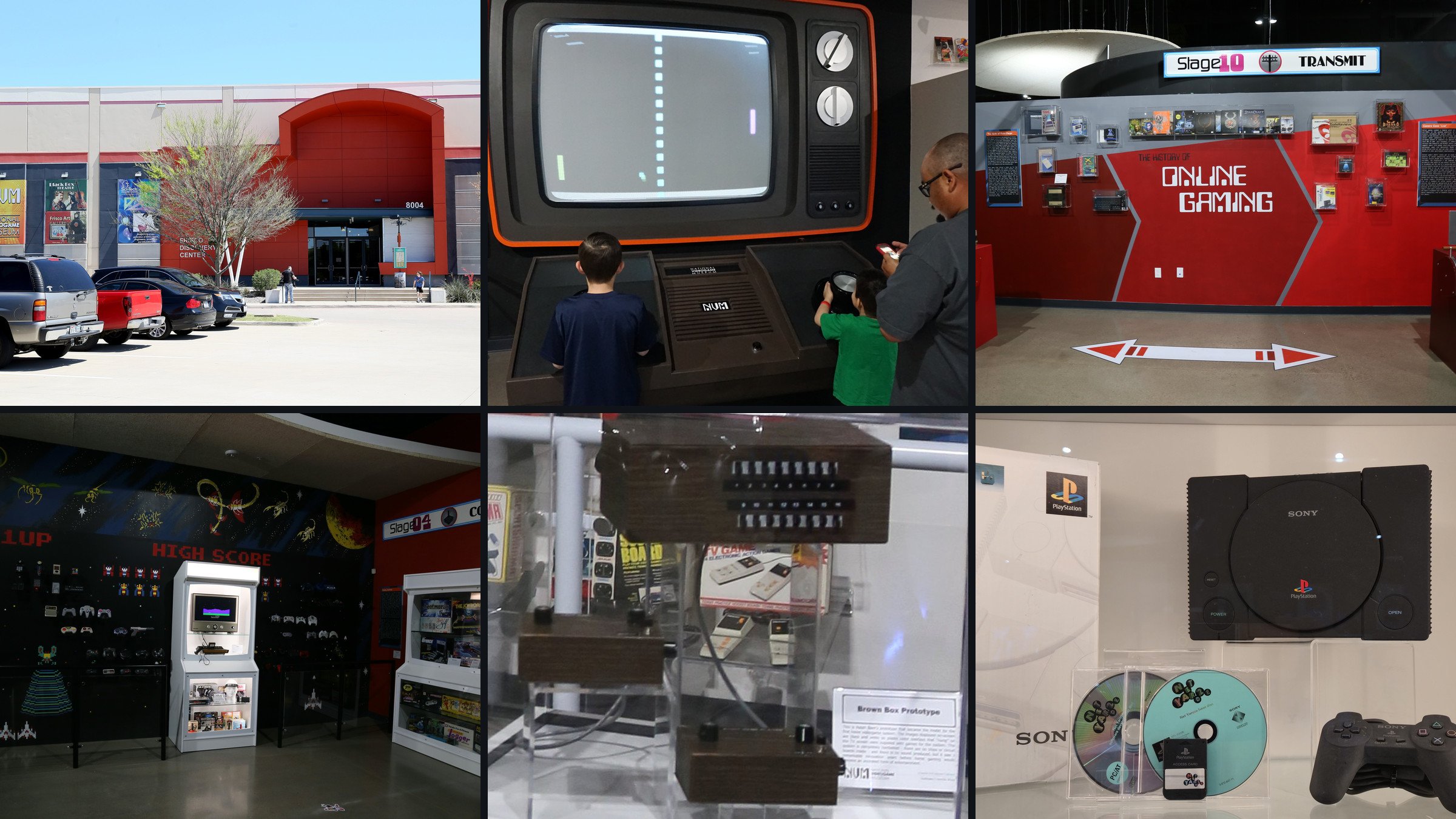
Tucked into a stretch of North Dallas Parkway in Frisco sits a building that, from the outside, gives away almost nothing about what’s inside. Walk through the doors, though, and you’re standing in front of the Brown Box — the actual 1967 prototype built by Ralph Baer, the engineer widely credited as the father of the home video game console. It’s the anchor artifact in a collection of more than 100,000 pieces that makes up the National Videogame Museum, one of Collin County’s more unlikely cultural landmarks and, by most accounts, the largest gaming collection on public display anywhere in the world.
A museum that almost landed in Silicon Valley
The museum’s founders originally planned to open it in Silicon Valley, the symbolic home of American tech culture. Instead, it opened in Frisco in April 2016, the result of a friendship with a local game developer and an appreciation for what the city had already built with its Discovery Center. It turned out to be a natural fit: North Texas has a real, if under-recognized, history in the games industry, and Frisco’s rapid growth into a family-and-entertainment destination gave the museum an audience it might not have found in a more expensive coastal market.
What’s actually inside
The scale of the collection is the first thing that tends to surprise visitors. Beyond Baer’s Brown Box, the museum holds the only known surviving Sega Neptune — a console that was fully developed and then canceled before it ever reached retail shelves, making the prototype on display essentially one of one. There’s a giant, fully playable Pong console built with paddles the size of dinner plates, original props from the notoriously campy 1993 “Super Mario Bros.” movie, and early virtual reality experiments like Atari’s MindLink headband, a 1980s attempt at controlling games with brainwaves that never made it to market.
The exhibits aren’t organized as a simple timeline so much as a series of immersive dioramas. One recreates a game store frozen in the middle of the Great Videogame Crash of 1983, the industry collapse that nearly killed the medium in North America before Nintendo revived it later in the decade. Another rebuilds a period-accurate living room and bedroom from the 1981–1993 stretch, right down to the wood-paneled television sets and shag carpet, letting visitors old enough to remember feel an uncomfortable jolt of recognition — and letting younger visitors see exactly what gaming looked like before flat screens and Wi-Fi.
Look, but also play
Unlike a traditional history museum, the National Videogame Museum doesn’t ask visitors to just look. Regular admission includes four arcade tokens redeemable in the on-site “Pixel Dreams” arcade, a working arcade stocked with classic cabinets and period-appropriate 1980s music piped through the space. It’s a deliberate curatorial choice: the “don’t touch” gallery sections exist alongside genuinely playable machines, so a visit doubles as both a history lesson and an afternoon of actual arcade gaming.
A quieter kind of only-in-Collin-County landmark
The National Videogame Museum doesn’t get the same regional attention as some of Collin County’s bigger-ticket attractions, but it occupies a genuinely unique niche: there’s no comparable collection of this scale open to the public anywhere else in the country. For a region that’s become known for corporate headquarters and new development, the museum is a reminder that Collin County also holds onto some deeply specific, deeply nerdy cultural history — carefully preserved by people who cared enough to save a Sega Neptune prototype before anyone else thought to.
The museum is located at 8004 N. Dallas Parkway in Frisco. Hours and current ticket pricing are subject to change, so visitors planning a trip should check the museum’s official visitor information page before heading out.